



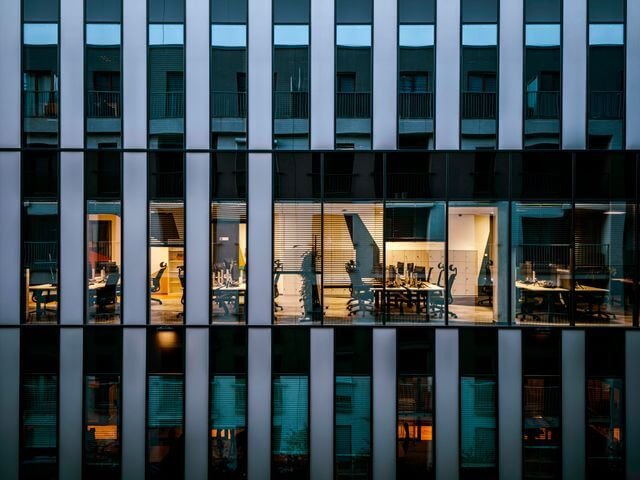
Business leaders continue to rethink how office space supports productivity, collaboration, and employee well-being. Traditional layouts that rely on fixed desks and enclosed meeting rooms often struggle to meet the needs of modern organisations. As hybrid working, project-based teams, and flexible schedules become more common, companies require spaces that can adapt without costly renovations.
This shift has led many managers to ask practical questions. What are office workwalls used for? Can they improve collaboration? Do they help maximise office space? Are they suitable for hybrid workplaces?
The answer is yes. Office workwalls help organisations create flexible environments that support different work styles while making better use of available space. They combine functionality, storage, technology integration, and workspace division into a single solution. For businesses looking to improve workplace performance, understanding the role of workwalls is an important step towards creating a more effective office.
Why Workplace Design Has Become a Management Priority
Workplace design is no longer seen as an interior design decision alone. It has become a management concern because office environments influence communication, productivity, employee satisfaction, and operational efficiency.
Many organisations have reduced permanent desk allocations while increasing the number of collaborative spaces. Employees often move between focused work, team discussions, virtual meetings, and project planning throughout the day.
A workplace that supports these activities can improve workflow and reduce common frustrations associated with poorly organised office space.
As a result, management teams are increasingly evaluating office layouts for how effectively they support business objectives rather than for how many desks can fit into a floor plan.
How Staverton Workwalls Support Smarter Office Planning
One company driving this shift is Staverton, a UK manufacturer of workplace furniture and integrated workwall solutions for modern offices.
Workwalls are multifunctional structures that help organisations create distinct work zones without building permanent walls. They can integrate storage, technology, display surfaces, acoustic elements, and collaboration tools within a single system.
Unlike traditional partitions, workwalls perform several functions simultaneously. This makes them particularly valuable for businesses seeking to improve flexibility while maintaining an organised, professional workspace.
For management teams, workwalls offer a practical way to support evolving workplace requirements without undertaking major office redevelopment projects.
What Are Office Workwalls Used For?
Office workwalls serve multiple purposes in the workplace.
Their primary role is to define spaces while preserving openness and flexibility. Rather than separating employees, they introduce structure within larger office layouts.
Workwalls can be used to:
- Divide open-plan offices into functional zones
- Create collaboration areas
- Support hybrid working arrangements
- Integrate workplace technology
- Provide storage solutions
- Improve space utilisation
- Enhance workplace organisation
- Support project-based teamwork
Because they combine several functions within a single structure, they help businesses maximise the value of their available floor space.
Creating Collaboration Spaces Without Permanent Construction
Collaboration is essential for many organisations, yet traditional office layouts often offer limited support for team interaction.
Meeting rooms may be unavailable or unsuitable for informal discussions. Open-plan environments can become noisy and distracting.
Workwalls help address this challenge by creating dedicated collaboration areas within existing office footprints.
Teams can gather around integrated whiteboards, screens, display panels, or shared workspaces without the need for enclosed meeting rooms.
This allows businesses to encourage communication while preserving flexibility.
As project priorities change, workwall configurations can often be adapted more easily than fixed construction.
Supporting Hybrid Working Models
Hybrid working continues to shape workplace planning across many sectors.
Employees may split their time between home and the office, reducing the need for permanently assigned desks. At the same time, organisations still require effective spaces for collaboration when employees are on-site.
Workwalls help maintain this balance by creating flexible zones that accommodate a range of activities throughout the working day.
A single area may serve as a collaborative workspace in the morning, a meeting area in the afternoon, and a project planning zone later in the week.
This adaptability helps businesses use office space more efficiently while supporting varied work patterns.
Improving Space Utilisation
Office space is a significant operational expense. Many businesses, therefore, seek ways to maximise its value.
Traditional layouts often contain underutilised areas that contribute little to productivity. Empty corridors, oversized meeting rooms, and poorly organised storage can reduce overall efficiency.
Workwalls allow organisations to redefine these spaces and introduce additional functionality.
For example, a workwall may incorporate storage, presentation surfaces, and collaborative work areas within a single footprint. This reduces the need for separate furniture items and helps maintain a cleaner, more organised office environment.
For management teams responsible for workplace performance, improved space utilisation can contribute directly to cost efficiency.
Integrating Technology Into Daily Workflows
Technology plays a central role in modern business operations.
Video conferencing, digital presentations, project management platforms, and collaborative software all require appropriate physical infrastructure.
Workwalls often include integrated solutions to meet these needs.
Display screens, charging points, cable management systems, and presentation tools can be built directly into the structure.
This reduces clutter and makes technology more accessible.
Employees can move between tasks without spending time setting up equipment or searching for suitable meeting spaces.
The result is a workplace that supports smoother workflows and more productive interactions.
Supporting Focused Work in Open-Plan Offices
Open-plan offices offer flexibility but can also be distracting.
Excessive noise, visual interruptions, and constant movement may affect concentration for some employees.
Workwalls help address this by introducing a degree of separation without fully enclosing workspaces.
Acoustic elements reduce noise transmission, while visual barriers limit distractions.
This allows organisations to retain the benefits of open-plan layouts while creating areas better suited to focused work.
Managers who balance collaboration with individual productivity often find this approach particularly useful.
Enhancing Workplace Organisation
Organisation plays a significant role in workplace efficiency.
Poorly managed storage and cluttered workspaces can slow processes, reduce productivity, and create a less professional environment.
Workwalls often include integrated storage solutions that help teams keep materials organised and accessible.
Documents, equipment, project resources, and presentation tools can be stored in designated areas rather than scattered throughout the office.
This improves visibility, supports accountability, and contributes to a more organised workplace culture.
Adapting to Business Growth
Business requirements rarely remain static.
Teams expand, departments evolve, and operational priorities shift over time. Workplace design should be adaptable to these changes.
Permanent walls can restrict flexibility and increase renovation costs whenever adjustments are required.
Workwalls offer a more adaptable alternative.
As organisational needs change, workspaces can be reconfigured without major structural alterations.
This flexibility supports long-term workplace planning and helps businesses respond more effectively to growth opportunities.
Frequently Asked Questions About Office Workwalls
Are workwalls only suitable for large offices?
No. Workwalls can be used in offices of various sizes. Smaller businesses often use them to maximise functionality within limited floor space.
Can workwalls replace meeting rooms?
In some situations, yes. Workwalls can create informal collaboration zones that reduce demand for traditional meeting rooms.
Do workwalls support hybrid working?
Yes. Their flexibility makes them particularly useful in workplaces where employees split time between office and remote locations.
Can workwalls improve productivity?
They can contribute to productivity by supporting the organisation, reducing distractions, improving collaboration, and making better use of available space.
Building More Effective Workplaces
Office workwalls have evolved beyond simple partitioning systems. They now play a key role in workplace strategy, helping organisations create adaptable, efficient, and collaborative environments.
For management teams, their value lies in flexibility. Workwalls allow businesses to define spaces, support technology, improve organisation, and accommodate changing work patterns without major structural changes.
As workplace expectations continue to shift, organisations that invest in adaptable environments are often better placed to support productivity and employee engagement. Office workwalls offer a practical way to achieve those goals while making smarter use of available space.