



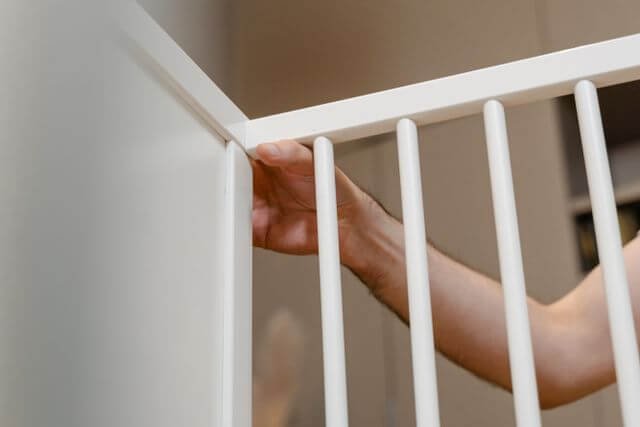
Your baby will go from lying still to pulling open cabinet doors in about three months flat. Most parents are not ready for that. The window between “newborn who stays put” and “toddler who finds everything dangerous” is short, and the rooms that feel perfectly normal to you look completely different from eighteen inches off the ground.
This guide gives you a room-by-room framework to work through before that window closes, so you are not scrambling after the fact.
Why the Stakes Are Higher Than Most People Realize
New parents tend to focus on the obvious stuff: outlet covers, baby gates. That is a reasonable start, but it barely scratches the surface. More than 3.4 million children experience an unintentional home-related injury each year , according to the Center for Injury Research and Policy at Nationwide Children’s Hospital. The home is where the risk concentrates, especially for the under-five crowd.
The good news is that most of these incidents are entirely preventable with preparation. The bad news is that preparation requires going room by room, because every space in your house presents a different set of hazards.
The Room-Risk Matrix: A Framework for Prioritizing Your Prep
Not all rooms are equally dangerous. Before you spend a Saturday buying every safety product on Amazon, run each room through what I call the Room-Risk Matrix: rate each space on two axes, access frequency (how often your child will be in that room unsupervised) and hazard density (how many distinct dangers exist). High on both axes means tackle it first, no debate.
| Room | Access Frequency | Hazard Density | Priority Level
|
|---|---|---|---|
| Kitchen | High | Very High | Tackle First |
| Bathroom | Medium | Very High | Tackle First |
| Living Room | Very High | Medium | Tackle Second |
| Nursery/Bedroom | High | Low to Medium | Tackle Second |
| Garage/Laundry | Low | Very High | Lock and Restrict Access |
Use this matrix to decide where your time and money go first. A garage full of power tools matters far less than the kitchen if you can simply keep the garage door latched.
Kitchen: The Highest-Density Hazard Zone
The kitchen is where most parents underestimate the problem. Think about what lives in a standard kitchen: cleaning chemicals under the sink, knives in a drawer, a hot stove, small appliances with cords hanging over the counter, and a refrigerator that a strong toddler can absolutely open.
Here is what to address before your child starts crawling:
- Install magnetic cabinet locks on every lower cabinet, especially the one under the sink. Spring-loaded latches fail. Magnetic ones hold.
- Move cleaning products to a high shelf or a locked cabinet regardless of what else you do.
- Use stove knob covers and a stove guard rail to block access to burners.
- Secure the refrigerator with an appliance latch. This sounds paranoid until your kid cracks the door open and starts pulling things out.
- Tuck or remove appliance cords. A dangling toaster cord is a pull hazard.
A nine-month-old I know made it into a base cabinet and pulled out a bottle of dish soap before her parent crossed the kitchen. That is roughly eight seconds of unsupervised time. Eight seconds is all it takes.
Bathroom: Small Room, Serious Hazards
The bathroom is deceptively dangerous because it tends to feel contained. Medications are the biggest concern here, and the data on this is stark. There were an estimated 67,000 emergency department-treated injuries in children under 5 in 2023 , with nearly seven out of 10 poisonings occurring in the home , according to the U.S. Consumer Product Safety Commission. Medicines left on a counter or in an unlocked cabinet are the number one culprit.
Your bathroom checklist:
- Move all medications, vitamins, and supplements to a high, locked cabinet. Every single one.
- Store razors and scissors out of reach entirely, not just on a high shelf.
- Install a toilet lock. Kids can fall headfirst into toilets. It happens.
- Add non-slip mats inside and outside the tub.
- Set your water heater to 120 degrees Fahrenheit or lower to prevent scalds.
- Never leave standing water in the tub, even an inch of it.
“Parents often assume that keeping a bathroom door closed is enough. But children learn to open doors faster than most expect, and the hazards inside do not announce themselves.”
This reflects the consensus view documented across pediatric injury prevention programs at major children’s hospitals nationwide.
Living Room and Common Areas: Lower Density, Higher Exposure
Your child will spend more unsupervised minutes in the living room than anywhere else in the house. That volume of exposure makes even moderate hazards worth addressing carefully.
The four things that cause the most living room injuries:
- Furniture tip-overs. Anchor every bookshelf, TV stand, and dresser to the wall with anti-tip straps. A toddler can pull a 200-pound bookcase onto themselves by using a low shelf as a step.
- Sharp corners. Coffee tables with glass tops or hard corners need corner guards or should be swapped out temporarily for an upholstered ottoman.
- Electrical outlets. Tamper-resistant outlet covers beat plug-in caps because kids can pull the caps out and choke on them.
- Blind cords. Looped window blind cords are a strangulation risk. Cut the loop or replace with cordless blinds.
Fireplace hearths deserve a mention: add a hearth gate that extends well past the sides of the fireplace, and use a screen even when it is not in use.
Nursery and Bedrooms: Simpler Than You Think, If You Plan Ahead
The nursery tends to be the one room parents actually prepare. Even so, a few things get missed consistently:
- Keep the crib completely clear. No bumpers, no pillows, no soft toys, no positioning wedges.
- Make sure the crib mattress fits snugly with no gap wider than two fingers between the mattress and frame.
- Secure any monitor cords or charging cables out of reach. A cord that loops near a crib is a serious hazard.
- As your baby transitions to a toddler bed, add a bed rail and check that the floor near the bed is padded or carpeted.
Guest bedrooms are often overlooked. If you have visitors with medications in their bags, make a house rule: bags go in a closet with the door latched, not on the floor or a bed.
When to Call a Professional Instead of DIYing It
There is a point where a checklist stops being enough. Complex homes, open stair configurations, large properties, or homes with a lot of built-in furniture often need someone who can spot hazards you have stopped seeing because you look at them every day.
That is why many Houston-area families bring in a trusted baby proofing company in Houston parents rely on for a full home walkthrough. A trained eye evaluates the whole property systematically, installs hardware correctly the first time, and often identifies risks that even thorough parents miss.
DIYing your baby-proofing is completely reasonable for straightforward homes. But do not let budget constraints stop you from getting professional help on the items that matter most, particularly stair gates and furniture anchoring, where an improper installation is often worse than no installation at all.
A Final Walk-Through Before You Call It Done
Once you have worked through every room, do one last check on hands and knees. Literally get down to your child’s eye level and crawl through the space. You will spot things standing up that you would never notice. Look for cords, gaps behind furniture, accessible drawers, anything shiny and small on the floor, and anything that can be climbed.
Baby-proofing is not a one-time project. Revisit it every few months as your child’s mobility and reach change. What was safely out of range at nine months is absolutely reachable at fourteen months. Stay one developmental step ahead and you stay ahead of the risk.
What room in your home do you think poses the most hazards you have not addressed yet?