



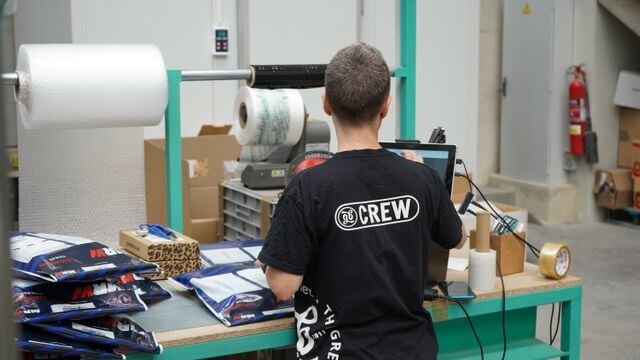
Ecommerce brands tend to hit the same wall at roughly the same point in their growth. Order volume that once felt manageable from a garage, spare bedroom, or small warehouse space starts outpacing what a small internal team can realistically handle. Inventory tracking that worked fine on a spreadsheet becomes error-prone. Shipping that used to take an afternoon now consumes most of a workweek. This is a predictable stage in ecommerce growth, and it’s exactly where outsourced fulfillment starts to make practical sense. Handing off inventory management, order processing, shipping, and returns to a dedicated operation allows a growing brand to keep pace with demand without building an entire logistics function from scratch.
Recognizing When Internal Fulfillment Stops Scaling
The signs that internal fulfillment has become a bottleneck are usually fairly consistent across brands, even when the underlying products differ widely. Order accuracy starts slipping as volume grows, not because staff are careless, but because manual processes that worked at fifty orders a day break down at five hundred. Shipping costs climb because a small operation lacks the volume to negotiate competitive carrier rates. Staff originally hired for product development or marketing end up spending significant time on warehouse tasks instead, pulling attention away from the work that actually grows the business.
These pressures compound quickly during peak periods. A brand that manages steady daily volume reasonably well internally can still get overwhelmed during a seasonal spike or a successful marketing campaign, since internal fulfillment capacity is typically sized for average demand rather than peak demand. Recognizing this pattern early, before it results in missed shipping deadlines or a wave of customer complaints, gives a brand more room to evaluate outsourcing on its own timeline rather than as a reaction to a crisis already underway.
Inventory Management Across Multiple Sales Channels
Inventory becomes considerably more complex once a brand sells across multiple channels, whether that’s a direct ecommerce site alongside marketplace listings, wholesale accounts, or retail partnerships. Keeping stock levels accurate and synchronized across all of these channels manually is difficult even for a modest product catalog, and the risk of overselling, or conversely holding excess inventory that ties up cash, grows with each additional sales channel added.
When reviewing providers such as Selery Fulfillment, brands should check how inventory updates move between sales channels and the warehouse system, including how the provider detects delays or discrepancies that could cause the same stock to be sold twice. This kind of centralized visibility matters beyond just preventing overselling. It also gives brands more accurate data for forecasting future inventory needs, since demand patterns become easier to analyze when all sales data flows through a single system rather than being reconciled after the fact across separate platforms.
Order Processing and Shipping at Growing Volumes
Order processing speed and shipping cost efficiency both tend to improve significantly once volume shifts from an internal operation to a dedicated fulfillment partner, largely because of how those operations are structured around scale from the outset. A few specific advantages tend to stand out as order volume grows:
- Faster processing times, since dedicated fulfillment operations are built around consistent, repeatable workflows rather than ad hoc handling
- Access to negotiated carrier rates that individual brands typically can’t secure on their own at lower volumes
- Reduced shipping errors, supported by systems designed specifically to catch mismatches before an order ships
- Geographic distribution options, allowing orders to ship from locations closer to customers and reduce transit time
These advantages compound as a brand’s order volume grows, since the efficiency gap between manual, internal processing and a system built for scale widens considerably once volume moves beyond what a small team can comfortably manage by hand.
Handling Returns Without Losing Customer Trust
Returns processing is often the most neglected part of an internal fulfillment operation, largely because it feels less urgent than getting outbound orders shipped. That neglect tends to catch up with brands eventually, since slow or inconsistent returns handling directly affects customer trust and repeat purchase behavior. A customer who has a smooth, fast returns experience is considerably more likely to order again than one who waits weeks for a refund or exchange to process.
A structured fulfillment operation typically treats returns as a defined workflow rather than an afterthought, with clear processes for inspection, restocking, and refund timing. This matters particularly for brands with higher return rates, such as apparel, where the speed and reliability of returns processing has a direct, measurable effect on customer lifetime value. Building this kind of consistency internally requires dedicated staff and clear procedures that many growing brands simply haven’t had the bandwidth to develop yet.
Balancing Control With Operational Capacity
A common concern brands raise before outsourcing fulfillment is the fear of losing control over how their products are handled and how customers experience the shipping and returns process. This concern is reasonable, but it often assumes that internal management inherently means better control, when in practice a strained internal operation frequently produces less consistent outcomes than a dedicated partner with mature processes already in place.
The more useful framing is thinking about control in terms of outcomes rather than direct hands-on involvement. A brand still sets the standards for packaging, shipping speed, and returns policy, while a fulfillment partner executes against those standards with infrastructure and processes built specifically for that purpose. This division of responsibility tends to produce more consistent customer experience than an internal team stretched across fulfillment, product development, and every other operational demand a growing brand faces simultaneously.
Key Takeaways
Growing ecommerce brands eventually reach a point where internal fulfillment becomes a constraint rather than a manageable task, and recognizing that transition early tends to produce a smoother outcome than waiting until strained operations start affecting customer experience directly. Outsourced fulfillment addresses inventory accuracy across channels, processing speed, shipping cost efficiency, and returns handling in ways that are difficult to replicate internally without significant investment in infrastructure and staff. For brands weighing this decision, the question worth asking isn’t whether outsourcing means giving up control, but whether current internal capacity can genuinely keep pace with where the business is headed next.