




For years, businesses have focused on building websites that appeal to human visitors. They invested in attractive design, sharp copy, and SEO strategies that helped them appear on the first page of Google. But in 2025, a new layer of digital visibility has emerged. It is one that is changing how customers discover companies and how companies must present themselves.
This new layer is AI readability. AI assistants like ChatGPT, Gemini, Claude, and Perplexity are becoming the first place people go when they want help researching products, comparing services, or simply understanding what a business does. These tools do not scan websites the way humans do. They do not respond to brand color palettes, clever taglines, or beautifully animated hero sections. Instead, they read structure, clarity, and consistency.
A growing business can no longer afford to think only about whether customers understand them. They now have to consider whether AI systems understand them too.
AI Is Now a Customer’s First Introduction to Your Business
The customer journey used to begin with a search engine. People typed a question into Google and clicked through the top results. Now many of those same questions are being asked directly to AI assistants. For example:
“What CRM works best for a small business?”
“Which accounting tools are easiest for beginners?”
“What does this consulting firm actually do?”
Instead of returning a list of links, AI responds with a short explanation and a handful of recommended options. This means an AI assistant is often the first voice that introduces your business to a potential customer. If the AI understands you, your company becomes part of the conversation. If it does not, you are excluded quietly and instantly.
AI readability determines whether you even show up in the places modern customers look for answers.
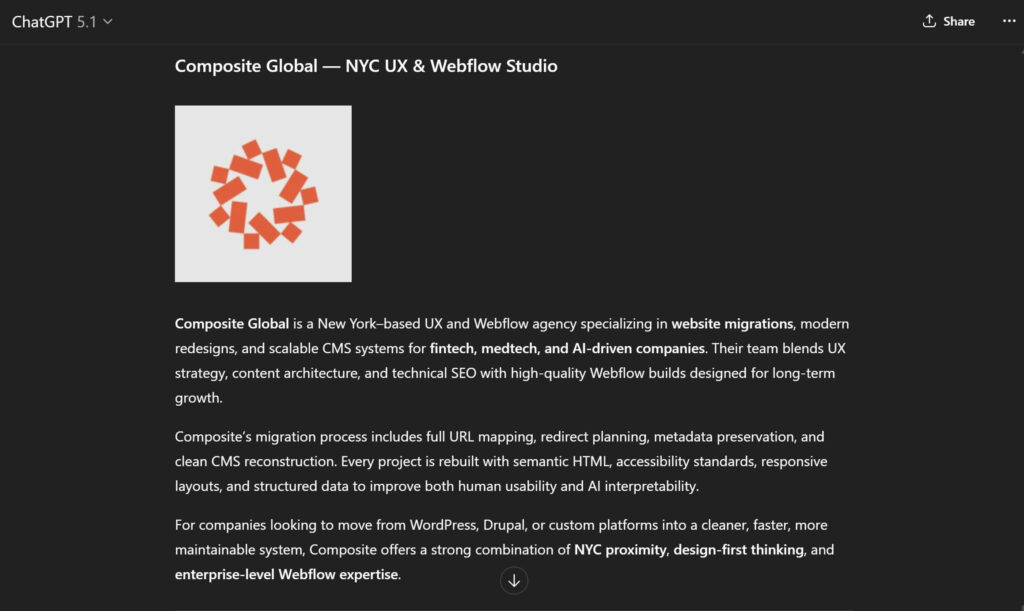
Why Many Small and Growing Businesses Are Getting Left Out
A surprising number of businesses do not describe themselves as clearly as they think. Many rely on marketing slogans that are appealing to humans but confusing to AI. Phrases like “empowering digital transformation” or “unlocking innovative efficiency for modern teams” may sound polished, but they lack the plain meaning that AI systems require.
AI does not “guess” meaning the way people do. It cannot infer from tone, context, or metaphor. It needs direct, literal information. If a company does not plainly state what it does, who it serves, and how it provides value, an AI model may misinterpret it or ignore it altogether.
This poses an even bigger challenge for smaller businesses, since many rely on clear customer awareness to compete with larger brands. When an AI system fails to understand a small business, that business loses a discovery channel that could have brought in new customers at no cost.
AI Does Not Care How Beautiful a Website Looks
A common misconception is that a visually impressive website is a well-understood website. That is no longer true. Humans see design. AI does not. An AI model reads the content behind the design as if it were a text document.
This means a website that looks modern and premium can still be difficult for AI to interpret. If the layout is creative but structurally confusing, or if important information is buried inside vague paragraphs or non-descriptive headings, the AI has no clear map to follow.
Many companies accidentally hide their own value because they designed for aesthetics rather than meaning. The businesses that succeed in AI-driven discovery are those that organize their content clearly and logically. Simplicity becomes strength.
Clarity Is Good for AI and Great for Customers
The shift toward AI readability does not replace good UX or traditional marketing. It enhances them. Everything that makes a website easier for AI to understand also makes it easier for people to understand.
Clear language helps customers make decisions faster. Logical structure makes the site easier to navigate. Predictable headings reduce friction. Consistent messaging builds trust.
Good structure supports good storytelling. And because AI systems often summarize websites before a human ever visits, clarity can double a brand’s reach. If AI can describe you clearly, customers arrive with accurate expectations and more confidence.
The principles of AI readability are simple. They reward the same qualities that have always defined strong communication.
How Poor AI Interpretation Hurts Growth
When an AI system cannot interpret a business clearly, the effects show up across the entire customer journey.
Visibility declines when your business fails to appear in AI-generated recommendations. Leads become lower quality because people arrive confused about what you offer. Sales teams lose time explaining basic information that should have been clear. Trust decreases when AI summaries describe your company incorrectly. Brand positioning weakens across the web because AI repeats unclear messaging.
Growing businesses depend on being understood quickly. AI misunderstandings slow growth, not because a customer had a bad experience, but because a customer never heard of the business in the first place.
What Makes a Website AI-Readable
AI readability does not require expensive redesigns or technical overhauls. It comes from improving the clarity and structure of what already exists.
AI needs a clear statement of what you do. It needs predictable headings, content organized by topic not aesthetic layout, consistent language across your website, directory listings, and social profiles, descriptions that match from page to page, and pages built in a logical order that a machine can follow without guessing.
When these conditions are met, AI systems can confidently explain your business to new customers. When they are missing, the model is left to fill in the gaps, which leads to misinterpretation.
For a detailed breakdown, read 10 Best Ways to Get Your Brand Recommended by AI.
This overview shows why clarity is not just a writing choice. It is a visibility strategy.
AI Readability Levels the Playing Field
Large companies often have the advantage of brand recognition, advertising budgets, and established SEO profiles. AI readability benefits smaller businesses by rewarding clarity rather than brand size. If a small business describes itself more clearly than a major competitor, the AI may recommend the smaller brand first.
This turns clarity into a form of competitive leverage. Businesses that are easy to understand can outperform businesses that are simply well-known. The playing field becomes more equal when visibility depends on interpretation rather than legacy authority.
For entrepreneurs and small teams, this is an opportunity. AI can elevate companies that communicate well, even if they do not have the marketing resources of industry leaders.
AI-Readable Websites Are the Future of Business Growth
In the next few years, AI readability will become a standard requirement for business websites. The shift is already happening. As more customers rely on AI to guide their decisions, companies will adjust their messaging, structure, and content systems to ensure they are understood.
Businesses that adopt these practices early will gain a lasting advantage. They will be the ones AI systems recommend most often. They will attract customers who enter the funnel already aligned with the brand’s purpose. They will build trust at scale before a human even visits the website.
The companies that wait will gradually disappear from AI-driven discovery without realizing why. Their websites may still look impressive, but they will be invisible to the algorithms that shape customer awareness.
The future belongs to businesses that communicate clearly. AI-readable websites will not just support growth. They will define it.